The last few weeks after my trip through Israel and Palestine is a bit of a blur to me now. I was finishing up my classes and writing papers, and an issue with British Airways led to me leaving exactly a week earlier than I anticipated, with less than 12 hours notice. I had just begun to appreciate certain things in Cairo and it was time to go. I said bye to all my American friends from all over the US and my Egyptian roommate, packed up my stuff and left in the dark of the early morning. It was quite the sudden way to leave, but it was easier than watching everyone else leave one by one. At least I had been able to pick up gifts at Khan El Khalili, the biggest market in Cairo, which I had visited before but needed to improve my Arabic before purchasing anything from it. A friend from Westboro visited with her friends from her semester abroad in Italy, and I got to play tour guide for a few days, bringing them to the Khan and helping them make travel plans.
Now, having been back in the states for almost as long as I was in Cairo, I have a new perspective on my semester. I have been able to reflect on what was beneficial and what was unfortunate.
Cairo is a crazy, dirty city, and I will probably not choose to live there again. The Middle East, however, has been calling me back since I left. I tell everyone who asks that I will likely move again to the Middle East again in the future, probably to the Levant area--Palestine, Jordan, Lebanon or Syria. The food there is better and the cities are cleaner.
While my semester in Cairo was an incredible learning experience, the truly amazing times were mostly spent outside of the city while traveling. I know my Arabic improved, but it would have improved more in a city with fewer English-speakers. I do hope that my Arabic knowledge will be like muscle memory when I return to the Middle East. I have few opportunities to speak it now, especially Colloquial Arabic since my class is only in Modern Standard. This is the last semester that I can take Arabic at GW, so I truly hope that I do not lose it all.
I do not regret my decision to study in Cairo at all. Many days of my semester there were incredibly hard. One night about mid-semester, about 10 minutes of a call home were spent with me overwhelmed by emotion and unable to speak or explain why I was so upset. Being stuck in a place so far out of my comfort zone for four months was truly a character-building experience. Were I given the opportunity, I would change a little about my semester. I would likely attend a different university, as the American University in Cairo is really not conducive to a student who would like to be more immersed in the culture and actually learn the language. I might even choose a different city, although my knowledge of Egyptian Arabic will likely come in handy in the future.
I think I learned a lot from the semester that I will never be able to explain. I encourage everyone who asks to study abroad if they have the opportunity. It is an unparalleled experience. I have been told that I am different than I was before my semester abroad, but not in a tangible way. I believe that I am already using what I learned about myself and about the world in my daily life and hope that it will benefit me going forward.
Sunday, April 4, 2010
And... Palestine
Several months after I actually returned to the US, I am finally finishing up my blog. Some of this entry was written about a week after my trip, the rest is from today. I wish I had written it immediately after the experience so that I would have my initial reactions, but this will have to do.
This is the second installment of my two post series on my trip to Israel and Palestine.
From Jerusalem, Nick, JM and I ventured into Palestine twice: once to go to Bethlehem for an afternoon and once to stay overnight in the capital, Ramallah. Bethlehem was a really interesting experience; we took the Arab bus system (there's a "Jewish" bus system, Egged, and an Arab bus system in Israel/Palestine) to the wall that separates the West Bank from the rest of Israel (i.e. Palestine from Israel, essentially), crossed through the checkpoint there and then continued to the Church of the Nativity by cab. The checkpoint was actually inside the wall, and we had to show our passports to get through. I was surprisingly entirely unaware of this wall before my trip to Jerusalem and venturing through it was truly an experience. We had no trouble getting through with our passports, but Palestinians crossing had to show their papers and scan their hands to get through. On the way back, we walked through hallways made of chain link fences and had to stand in line for about 45 minutes even though there were only about 25 people in front of us. It was a really slow process.
The Church of the Nativity was cool, and Bethlehem was a nice little town, mostly centered around the Church. Overall, this day was mostly uneventful and certainly not as significant of an experience as our second trip into Palestine.
Our trip to Ramallah, the administrative capital of the Palestinian Authority, was a really great learning experience. We stayed with Nick's friend John, a GW grad that Nick knew freshman year. The 3 of us arrived in the city (once again, by Arab bus, but we didn't need to go through a checkpoint to go in this time) a few hours before we were supposed to meet up with John, so we wandered around a bit on our own and visited Yassir Arafat's tomb. It was really decked out in Palestinian excitement; it was a strange experience to be there, especially considering the way Arafat is portrayed in the US.
For the first few hours that we were there, we were so incredibly nervous. Before we met up with John, we basically assumed that every Palestinian we passed knew we were American and hated us for it. We were all a bit jumpy any time we found our way to a more secluded area, convinced that someone was just going to drive up and kidnap us. The most unnerving part was entering the security compound where Arafat is buried, past armed guards.
However, once we finally met up with John, we were completely corrected. John is a Christian Palestinian-American; he grew up in the US but most of his extended family currently lives in Ramallah. He is working for a non-profit in Ramallah, regularly traveling between there and Jerusalem. His perspective was incredibly interesting; sympathetic of the Palestinian cause but putting equal blame on them for the continuation of the conflict. He is from a clearly wealthy family in Palestine and benefitted from an American education. I will continue with notes about the trip after the travelogue-type description.
After visiting Arafat's tomb, JM, Nick and I found our way back downtown, where we found a little restaurant to enjoy a beer or two. We then headed to John's family's store to meet up with John where we chatted with his uncle for a few minutes until John arrived. The five of us went next to John's apartment to drop our stuff off. We spent the evening in two separate bars before heading back to John's place for the night. In the morning, we grabbed breakfast at a little restaurant that serves real bacon (incredibly difficult to find in the Middle East where they don't eat pork!).
After breakfast, we took a "service" (pronounced in a French accent, like say-r-veese) to Taybeh (tie-bay), a small Christian village about 20 minutes outside Ramallah. The views were amazing, but we went there to visit the only Palestinian brewery, named after the town. They gave us a small cup of beer while we watched a short video on the history of the brewery, then we got a tour of the tiny warehouse-like room where the vast majority of their beer is made. There is another brewery that also makes Taybeh beer in Germany, and much of their exported beer is made there. It seems to be a lucrative little business. Look out for Taybeh beer in the US this summer! After some pictures of the views, we jumped back into a service to head back to the city. From there, we continued on through Jerusalem to Tel Aviv, where we spent a rather uneventful night.
Our group split up from the next morning, and JM and I headed back to Cairo with only minor difficulty. At the Egyptian border, we discovered that we had missed all of the busses back to Cairo, and therefore we had to pay an excessive amount to take a shared cab back to the city. It was a great language experience, though, because as we were waiting for others who might want to split the ride and the cost with us, we had conversations in Arabic with the local Bedouin men who were waiting around to drive people back as well. We were exhausted and Arabic conversing was difficult, but it was definitely worthwhile.
So, some important notes from Palestine that made the experience so important.
Going forward: I apologize if I become political from this point on. It is almost unavoidable when talking about this issue. While I try to open my mind to as many perspectives as possible, I find myself increasingly falling on one side of the argument. I will try to stick to what I saw and heard, but I apologize if I stray.
-John clarified to us that Palestinians in Ramallah are not angry at Americans who come there; rather, they are grateful. This concept was supported by the conversation we had with the restaurant owner in the city, who explicitly said that the American government needs people like us, people who have actually traveled to the Middle East and experienced it ourselves. They want us to come and see Palestine. They don't want people making policy who've never seen it with their own eyes. While clearly it's not feasible for every government employee to travel to the Middle East, it is an important for everyone to be informed about every side of an issue, not just the popular American point of view.
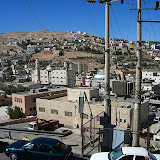
-If there are two things that I would encourage you to research in relation to the current Middle East situation, it is the Separation Wall and Israeli settlers. While I have discussed the former, the latter is even more pressing. Israeli settlements are the biggest problem in the conflict. Israeli citizens (generally Zionists who believe in the existence of an Israel that spans from the Mediterranean Sea to the Jordan River) are building communities in "Palestinian" lands, specifically East Jerusalem and the West Bank. While the American government has been pressing the Israeli government to stop these settlements, they have refused despite their blatant disregard for international law and the welfare of the Palestinian people. These settlements are built next to or within existing Palestinian communities, not in the expanses of open land in the West Bank. The worst part? Only Israeli citizens are allowed water 7 days per week. Palestinian houses have water tanks on their roofs to collect and store water when it is running about 3 or 4 days per week so that they can actually have water 7 days per week. This includes John's apartment. As we looked out over the hills, we could see which communities were Arab and which were Jewish (Israeli) by presence or lack of water tanks on the roofs of the houses. There have been many instances of violence between Palestinians and settlers; settlers are often known to carry guns around for the sake of "self-defense." Unarmed Palestinian civilians have been shot in the West Bank by Israeli settlers. It's like sending American civilians to build a permanent community immediately next to an Iraqi village that hates the American occupation, then giving them blatant preferential treatment. Of course there is going to be violence, from both sides. Why do it?
-Controls on Palestinians: they are not allowed Israeli passports, and Palestinian passports do not exist. In some cases, they are given Jordanian passports, but generally they are just unable to leave whichever Palestinian area they live in (the West Bank or Gaza). Residents of Jerusalem may travel into the West Bank but (Palestinian) West Bank residents may not travel to Jerusalem or anywhere else in Israel without special permission. Until recently, they were unable to travel between cities in the West Bank. Of course, the standard response to this is that it is necessary to ensure the safety of Israeli citizens. To that, I wonder why Israeli citizens are being sponsored by their government to move into the West Bank. While the threat to Israelis is real, so is the arguably excessive oppression.
On the other hand:
-Ramallah is beautiful and well run. Their cab system is far superior the system in any American city I've visited. All rides fall into one of a few price brackets, so it's never a guessing-game about how much your ride will cost. They have shared cabs that leave from certain locations and will travel anywhere given enough interested in that location. The roads are well-paved and clean. Many families (like John's) are very well off. So to opponents of a two-state solution that argue that there the Palestinian infrastructure is gone because of Israel, I beg to differ. The government in the West Bank is clearly not in shambles if Ramallah can look like that.
But a response:
-According to John, within the past two years, a political assassination occurred in Ramallah, within a few blocks of where JM, Nick and I stopped for a drink before meeting up with John. Israeli vehicles appeared on the streets, a person was shot dead, and then they disappeared. The Israeli presence in the city is real, and Israeli policy is that they control areas outside of the major cities. At any moment, according to John, Israeli security forces could appear on the streets.
-*Furthermore, Israel controls the borders from the Mediterranean Sea to Jordan. What does that mean for the Palestinian economy? Everything costs significantly more when imported. Luxury cars cost twice as much as their actual purchasing price by the time Israel and the Palestinian Authority both collect taxes (the rich families in Ramallah can somehow still afford them; we saw many on the street). A major potential source of Palestinian income, olive oil, is diminished by Israeli controls on exports, and by systematic destruction of olive trees in the West Bank.
*Note: I have not done any study on this, so I cannot verify the truth behind this or give any more specific details.
In summary, the Palestine-Israel conflict is far more complicated than I ever imagined. Traveling there has opened my eyes in some ways and encouraged me to study more about the subject. Also, it is important to distinguish between a broader Arab-Israeli conflict and the more localized situation. Many Arab countries are also hostile to Palestinians, as their presence stirs up conflict as well as they struggle to return to their alleged rightful homeland.
I look forward to returning to the area at some point in the future to gain a broader perspective of the situation. While I have spoken with many American Jews, I have not had the opportunity to converse with any Israelis on the subject. Also, I would like to learn about the situation from a Palestinian, born, raised and living in the country, as well as expand my journey beyond the rich, essentially 100% Palestianian, Ramallah.
This is the second installment of my two post series on my trip to Israel and Palestine.
From Jerusalem, Nick, JM and I ventured into Palestine twice: once to go to Bethlehem for an afternoon and once to stay overnight in the capital, Ramallah. Bethlehem was a really interesting experience; we took the Arab bus system (there's a "Jewish" bus system, Egged, and an Arab bus system in Israel/Palestine) to the wall that separates the West Bank from the rest of Israel (i.e. Palestine from Israel, essentially), crossed through the checkpoint there and then continued to the Church of the Nativity by cab. The checkpoint was actually inside the wall, and we had to show our passports to get through. I was surprisingly entirely unaware of this wall before my trip to Jerusalem and venturing through it was truly an experience. We had no trouble getting through with our passports, but Palestinians crossing had to show their papers and scan their hands to get through. On the way back, we walked through hallways made of chain link fences and had to stand in line for about 45 minutes even though there were only about 25 people in front of us. It was a really slow process.
| From Israel/Palestine |
| From Israel/Palestine |
The Church of the Nativity was cool, and Bethlehem was a nice little town, mostly centered around the Church. Overall, this day was mostly uneventful and certainly not as significant of an experience as our second trip into Palestine.
Our trip to Ramallah, the administrative capital of the Palestinian Authority, was a really great learning experience. We stayed with Nick's friend John, a GW grad that Nick knew freshman year. The 3 of us arrived in the city (once again, by Arab bus, but we didn't need to go through a checkpoint to go in this time) a few hours before we were supposed to meet up with John, so we wandered around a bit on our own and visited Yassir Arafat's tomb. It was really decked out in Palestinian excitement; it was a strange experience to be there, especially considering the way Arafat is portrayed in the US.
| From Israel/Palestine |
For the first few hours that we were there, we were so incredibly nervous. Before we met up with John, we basically assumed that every Palestinian we passed knew we were American and hated us for it. We were all a bit jumpy any time we found our way to a more secluded area, convinced that someone was just going to drive up and kidnap us. The most unnerving part was entering the security compound where Arafat is buried, past armed guards.
However, once we finally met up with John, we were completely corrected. John is a Christian Palestinian-American; he grew up in the US but most of his extended family currently lives in Ramallah. He is working for a non-profit in Ramallah, regularly traveling between there and Jerusalem. His perspective was incredibly interesting; sympathetic of the Palestinian cause but putting equal blame on them for the continuation of the conflict. He is from a clearly wealthy family in Palestine and benefitted from an American education. I will continue with notes about the trip after the travelogue-type description.
After visiting Arafat's tomb, JM, Nick and I found our way back downtown, where we found a little restaurant to enjoy a beer or two. We then headed to John's family's store to meet up with John where we chatted with his uncle for a few minutes until John arrived. The five of us went next to John's apartment to drop our stuff off. We spent the evening in two separate bars before heading back to John's place for the night. In the morning, we grabbed breakfast at a little restaurant that serves real bacon (incredibly difficult to find in the Middle East where they don't eat pork!).
After breakfast, we took a "service" (pronounced in a French accent, like say-r-veese) to Taybeh (tie-bay), a small Christian village about 20 minutes outside Ramallah. The views were amazing, but we went there to visit the only Palestinian brewery, named after the town. They gave us a small cup of beer while we watched a short video on the history of the brewery, then we got a tour of the tiny warehouse-like room where the vast majority of their beer is made. There is another brewery that also makes Taybeh beer in Germany, and much of their exported beer is made there. It seems to be a lucrative little business. Look out for Taybeh beer in the US this summer! After some pictures of the views, we jumped back into a service to head back to the city. From there, we continued on through Jerusalem to Tel Aviv, where we spent a rather uneventful night.
| From Israel/Palestine |
| From Israel/Palestine |
| From Israel/Palestine |
Our group split up from the next morning, and JM and I headed back to Cairo with only minor difficulty. At the Egyptian border, we discovered that we had missed all of the busses back to Cairo, and therefore we had to pay an excessive amount to take a shared cab back to the city. It was a great language experience, though, because as we were waiting for others who might want to split the ride and the cost with us, we had conversations in Arabic with the local Bedouin men who were waiting around to drive people back as well. We were exhausted and Arabic conversing was difficult, but it was definitely worthwhile.
So, some important notes from Palestine that made the experience so important.
Going forward: I apologize if I become political from this point on. It is almost unavoidable when talking about this issue. While I try to open my mind to as many perspectives as possible, I find myself increasingly falling on one side of the argument. I will try to stick to what I saw and heard, but I apologize if I stray.
-John clarified to us that Palestinians in Ramallah are not angry at Americans who come there; rather, they are grateful. This concept was supported by the conversation we had with the restaurant owner in the city, who explicitly said that the American government needs people like us, people who have actually traveled to the Middle East and experienced it ourselves. They want us to come and see Palestine. They don't want people making policy who've never seen it with their own eyes. While clearly it's not feasible for every government employee to travel to the Middle East, it is an important for everyone to be informed about every side of an issue, not just the popular American point of view.
-If there are two things that I would encourage you to research in relation to the current Middle East situation, it is the Separation Wall and Israeli settlers. While I have discussed the former, the latter is even more pressing. Israeli settlements are the biggest problem in the conflict. Israeli citizens (generally Zionists who believe in the existence of an Israel that spans from the Mediterranean Sea to the Jordan River) are building communities in "Palestinian" lands, specifically East Jerusalem and the West Bank. While the American government has been pressing the Israeli government to stop these settlements, they have refused despite their blatant disregard for international law and the welfare of the Palestinian people. These settlements are built next to or within existing Palestinian communities, not in the expanses of open land in the West Bank. The worst part? Only Israeli citizens are allowed water 7 days per week. Palestinian houses have water tanks on their roofs to collect and store water when it is running about 3 or 4 days per week so that they can actually have water 7 days per week. This includes John's apartment. As we looked out over the hills, we could see which communities were Arab and which were Jewish (Israeli) by presence or lack of water tanks on the roofs of the houses. There have been many instances of violence between Palestinians and settlers; settlers are often known to carry guns around for the sake of "self-defense." Unarmed Palestinian civilians have been shot in the West Bank by Israeli settlers. It's like sending American civilians to build a permanent community immediately next to an Iraqi village that hates the American occupation, then giving them blatant preferential treatment. Of course there is going to be violence, from both sides. Why do it?
-Controls on Palestinians: they are not allowed Israeli passports, and Palestinian passports do not exist. In some cases, they are given Jordanian passports, but generally they are just unable to leave whichever Palestinian area they live in (the West Bank or Gaza). Residents of Jerusalem may travel into the West Bank but (Palestinian) West Bank residents may not travel to Jerusalem or anywhere else in Israel without special permission. Until recently, they were unable to travel between cities in the West Bank. Of course, the standard response to this is that it is necessary to ensure the safety of Israeli citizens. To that, I wonder why Israeli citizens are being sponsored by their government to move into the West Bank. While the threat to Israelis is real, so is the arguably excessive oppression.
On the other hand:
-Ramallah is beautiful and well run. Their cab system is far superior the system in any American city I've visited. All rides fall into one of a few price brackets, so it's never a guessing-game about how much your ride will cost. They have shared cabs that leave from certain locations and will travel anywhere given enough interested in that location. The roads are well-paved and clean. Many families (like John's) are very well off. So to opponents of a two-state solution that argue that there the Palestinian infrastructure is gone because of Israel, I beg to differ. The government in the West Bank is clearly not in shambles if Ramallah can look like that.
But a response:
-According to John, within the past two years, a political assassination occurred in Ramallah, within a few blocks of where JM, Nick and I stopped for a drink before meeting up with John. Israeli vehicles appeared on the streets, a person was shot dead, and then they disappeared. The Israeli presence in the city is real, and Israeli policy is that they control areas outside of the major cities. At any moment, according to John, Israeli security forces could appear on the streets.
-*Furthermore, Israel controls the borders from the Mediterranean Sea to Jordan. What does that mean for the Palestinian economy? Everything costs significantly more when imported. Luxury cars cost twice as much as their actual purchasing price by the time Israel and the Palestinian Authority both collect taxes (the rich families in Ramallah can somehow still afford them; we saw many on the street). A major potential source of Palestinian income, olive oil, is diminished by Israeli controls on exports, and by systematic destruction of olive trees in the West Bank.
*Note: I have not done any study on this, so I cannot verify the truth behind this or give any more specific details.
In summary, the Palestine-Israel conflict is far more complicated than I ever imagined. Traveling there has opened my eyes in some ways and encouraged me to study more about the subject. Also, it is important to distinguish between a broader Arab-Israeli conflict and the more localized situation. Many Arab countries are also hostile to Palestinians, as their presence stirs up conflict as well as they struggle to return to their alleged rightful homeland.
I look forward to returning to the area at some point in the future to gain a broader perspective of the situation. While I have spoken with many American Jews, I have not had the opportunity to converse with any Israelis on the subject. Also, I would like to learn about the situation from a Palestinian, born, raised and living in the country, as well as expand my journey beyond the rich, essentially 100% Palestianian, Ramallah.
Friday, December 4, 2009
Israel/Palestine Part 1--Jerusalem
I spent this past week traveling through Israel and Palestine (two places, no matter what the US government claims). I'm going to separate the trip into separate blog posts by city to make writing and reading about the trip a bit more manageable.
First up: Jerusalem
Wednesday night, 9 of us (American study abroad students from AUC) climbed onto a bus at 11pm outside our dorm, headed for Taba, the Egyptian city at the border with Israel. The ride took about 5 hours, and we arrived in Taba at about 4 in the morning. The 9 of us were split into two traveling groups: JM, Nick and I, and the other 6. We entered the Israeli side after some discussion with the Egyptian border officers and were immediately pulled aside for questioning. After most of us (not including me) were questioned, they let us go through the normal process. We assumed the questioning was over, but that was only the preliminary round. My group of 3 made it through rather quickly, despite the Lebanese stamps on both my passport and JM's. We got into a cab on the other side and rode to Eilat, the closest Israeli city to the border, about 10 minutes away. From there, we intended to take the first bus to Jerusalem; however, it was sold out and we had to wait around til 2 for the next one. That worked out ok, since the other 6 were stuck at the border for a few hours as the Israelis questioned the two Muslim girls. We met up with the rest of the group and took the bus up to Jerusalem, where we split to go to our separate hostels. Not 10 minutes after arriving in Jerusalem, JM and I crossed the street when there was a red "Don't Walk" light; apparently that's actually illegal in Israel (as it is in the States, though it's never enforced there), and we received 100 shekel tickets, about $30. Welcome to Israel.
So the three of us checked into our hostel, the Palm Hotel. We were staying in a mixed dorm room with about 5 other people. It had no heat. For $11/night, I guess we can't complain. An extra blanket did the trick. Other than the lack of heat, the hostel wasn't too bad, just a little dirty. The rest of the hostel had heat, and in fact had free internet with free use of community computers, albeit with a restriction of a half-hour per person, as there were only 2 computers for the hostel. We did also have free breakfast too, which was amazing because they actually had real hummus. In Egypt, it's just tahina (sesame paste, with oil and spices; hummus has chickpeas and is so much better), so I ate far more hummus each morning than I should have.
Day life in Jerusalem:
I spent the days with just the other two in my travel group. Our explorations of Jerusalem were restricted mostly to the Old City, venturing outside the walls only to see the Mount of Olives and at night to go to bars or go back to our hostel. We visited the Holy Sepulcher Church, supposedly on the spot where Jesus was crucified. The church is huge; it has rooms commemorating the various aspects of Jesus' crucifixion, including the stone on which Jesus was supposedly lain after he was crucified. Touching it gave me a really weird feeling that persisted for about 10 minutes afterward; I can't explain it, but both JM and Nick agreed. There is also a room underground where Jesus' cross was allegedly found.
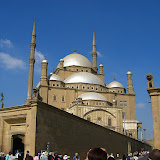
The Dome of the Rock is a mosque that only Muslims are allowed to enter, unless the guards are in a good mood that day. We tried to go into Temple Mount (the area all around the Dome of the Rock), but we were denied entry four times. Oh well. It is easily the most recognizable place in Jerusalem, and I have many pictures of it from various angles. I don't want to mess up the historical and religious significance of it, so you can read about it on the wikipedia page: http://en.wikipedia.org/wiki/Dome_of_the_Rock.
We also visited (and touched) the Western Wall, also called the Wailing Wall. It is the most significant place in the Old City for Jews, the only part of a temple left that used to stand on that spot. When it was destroyed, Jews were afraid to rebuild it for fear that they would step on the holiest spot that was reserved only for religious leaders, so they prayed against the Wailing Wall. Again, wikipedia for accurate history and significance: http://en.wikipedia.org/wiki/Wailing_wall.
There are many other churches and places of religious significance throughout the Old City, too many to remember or really even worth mentioning.
Jerusalem by night:
Our first night in Jerusalem was Thanksgiving, and the closest we got to turkey and the rest of the tradition was burgers and Sam Adams. Oh well, I'll have to wait til Christmas for amazing home-cooked holiday food again. We were pretty tired our first night, so we just headed back to our hostel after dinner. The next night, however, we found a great bar with happy hour until 10. We visited that bar again the third night and proceeded to a dance club across the street. Overall, Jerusalem night life was much better than I expected considering that it's an old, religious city.
Other notes about Jerusalem:
The city is split between West Jerusalem, the Jewish side, and East Jerusalem, the Arab side. There are separate bus systems for Jews and Arabs. When we were looking for our hostel, our cabbie dropped us off nearby in West Jerusalem and upon asking directions, I was given a disgusted look and informed that it was "in the Arab part." We crossed the street into the Arab part, and I immediately felt more at home. They were speaking a language I understand (unlike Hebrew) and felt like a cleaner, nicer version of Cairo.
The food in Jerusalem is AMAZING. Arab food: the shawarma (chopped meat or chicken with spices and such) was much better than Cairo, and they have the best kabobs I've ever had. They also have real hummus, and their falafel is unbelievable. I really miss that food now that I'm back in Cairo. Israeli food: bagels! The delis had the best bagels and cream cheese. They also put tomatoes on them if you want, which I'd never thought of. I had a whole wheat bagel with salmon cream cheese and tomato in the Old City. Amazing.
~~~
First up: Jerusalem
Wednesday night, 9 of us (American study abroad students from AUC) climbed onto a bus at 11pm outside our dorm, headed for Taba, the Egyptian city at the border with Israel. The ride took about 5 hours, and we arrived in Taba at about 4 in the morning. The 9 of us were split into two traveling groups: JM, Nick and I, and the other 6. We entered the Israeli side after some discussion with the Egyptian border officers and were immediately pulled aside for questioning. After most of us (not including me) were questioned, they let us go through the normal process. We assumed the questioning was over, but that was only the preliminary round. My group of 3 made it through rather quickly, despite the Lebanese stamps on both my passport and JM's. We got into a cab on the other side and rode to Eilat, the closest Israeli city to the border, about 10 minutes away. From there, we intended to take the first bus to Jerusalem; however, it was sold out and we had to wait around til 2 for the next one. That worked out ok, since the other 6 were stuck at the border for a few hours as the Israelis questioned the two Muslim girls. We met up with the rest of the group and took the bus up to Jerusalem, where we split to go to our separate hostels. Not 10 minutes after arriving in Jerusalem, JM and I crossed the street when there was a red "Don't Walk" light; apparently that's actually illegal in Israel (as it is in the States, though it's never enforced there), and we received 100 shekel tickets, about $30. Welcome to Israel.
So the three of us checked into our hostel, the Palm Hotel. We were staying in a mixed dorm room with about 5 other people. It had no heat. For $11/night, I guess we can't complain. An extra blanket did the trick. Other than the lack of heat, the hostel wasn't too bad, just a little dirty. The rest of the hostel had heat, and in fact had free internet with free use of community computers, albeit with a restriction of a half-hour per person, as there were only 2 computers for the hostel. We did also have free breakfast too, which was amazing because they actually had real hummus. In Egypt, it's just tahina (sesame paste, with oil and spices; hummus has chickpeas and is so much better), so I ate far more hummus each morning than I should have.
Day life in Jerusalem:
I spent the days with just the other two in my travel group. Our explorations of Jerusalem were restricted mostly to the Old City, venturing outside the walls only to see the Mount of Olives and at night to go to bars or go back to our hostel. We visited the Holy Sepulcher Church, supposedly on the spot where Jesus was crucified. The church is huge; it has rooms commemorating the various aspects of Jesus' crucifixion, including the stone on which Jesus was supposedly lain after he was crucified. Touching it gave me a really weird feeling that persisted for about 10 minutes afterward; I can't explain it, but both JM and Nick agreed. There is also a room underground where Jesus' cross was allegedly found.
| From Israel/Palestine |
| From Israel/Palestine |
| From Israel/Palestine |
We also visited (and touched) the Western Wall, also called the Wailing Wall. It is the most significant place in the Old City for Jews, the only part of a temple left that used to stand on that spot. When it was destroyed, Jews were afraid to rebuild it for fear that they would step on the holiest spot that was reserved only for religious leaders, so they prayed against the Wailing Wall. Again, wikipedia for accurate history and significance: http://en.wikipedia.org/wiki/Wailing_wall.
| From Israel/Palestine |
There are many other churches and places of religious significance throughout the Old City, too many to remember or really even worth mentioning.
Jerusalem by night:
Our first night in Jerusalem was Thanksgiving, and the closest we got to turkey and the rest of the tradition was burgers and Sam Adams. Oh well, I'll have to wait til Christmas for amazing home-cooked holiday food again. We were pretty tired our first night, so we just headed back to our hostel after dinner. The next night, however, we found a great bar with happy hour until 10. We visited that bar again the third night and proceeded to a dance club across the street. Overall, Jerusalem night life was much better than I expected considering that it's an old, religious city.
Other notes about Jerusalem:
The city is split between West Jerusalem, the Jewish side, and East Jerusalem, the Arab side. There are separate bus systems for Jews and Arabs. When we were looking for our hostel, our cabbie dropped us off nearby in West Jerusalem and upon asking directions, I was given a disgusted look and informed that it was "in the Arab part." We crossed the street into the Arab part, and I immediately felt more at home. They were speaking a language I understand (unlike Hebrew) and felt like a cleaner, nicer version of Cairo.
The food in Jerusalem is AMAZING. Arab food: the shawarma (chopped meat or chicken with spices and such) was much better than Cairo, and they have the best kabobs I've ever had. They also have real hummus, and their falafel is unbelievable. I really miss that food now that I'm back in Cairo. Israeli food: bagels! The delis had the best bagels and cream cheese. They also put tomatoes on them if you want, which I'd never thought of. I had a whole wheat bagel with salmon cream cheese and tomato in the Old City. Amazing.
~~~
| From Israel/Palestine |
Wednesday, November 25, 2009
I haven't written a post in a while, so I have a couple things to get through.
First of all: Egyptian soccer (kura). This past week, Egypt played Algeria in two different games to decide which team would qualify to advance to the World Cup qualifiers. In the first game, Egypt had to win by 2 goals to essentially tie Algeria in standings and force the final game. In a very stressful game, Egypt pulled through with a second goal in the last 3 minutes, keeping Algeria at 0 and necessitating the next game. The first game elicited much excitement on the streets of Cairo, but it was relatively tame where I live, the Zamalek area. However, there had been a few random acts of violence preceding the game and probably a few after; one beforehand had injured 4 Algerian players when people threw rocks at their bus in retaliation for Algerians keeping Egyptians players awake all night right before the previous game in Algeria. Anyway, I watched the second game with several friends at the Hard Rock Cafe just across the river from Zamalek. The game was held in Sudan so it would be "neutral territory," which was a bit of a falsehood since the Sudanese were clearly pro-Algeria. In another very tense game, Egypt was unable to secure a victory and everyone left the Hard Rock Cafe disappointed. There didn't seem to be much of a reaction on the streets, however, as I had expected. I thought that Egyptians would just end up wallowing quietly in their defeat. The next day, apparently news broke in Egypt that Egyptians in Sudan had been the victims of some violent Algerians, and the night after the game, a riot formed outside the Algerian Embassy in Zamalek (about a 5-10 minute walk from my dorm), breaking anything that would break near them from store-fronts to plastic signs. They lit things on fire and flipped a car or two. I had gone to bed early and missed all of this. The next day, much of Zamalek was on lockdown and the bridges were being controlled (Zamalek is an island) to prevent a crowd from coming and causing the disruption of the night before. The riot police were assembled en masse and many streets were completely closed (as an American who lived in the AUC dorms, I was essentially able to move freely through the barricades with only a little explanation... good Arabic practice). However, it appeared that the riots were a one-night thing and I didn't see much of anyone on the streets. Egyptians kept asking me what my opinion was on the matter (in Arabic, so even once I figured out what they were asking, I wasn't sure how to respond). They kept muttering "Al-Gez-e-eer" (Algeria). This dispute has spilled over into politics as well, something related to the foreign ambassadors to each country being recalled I guess. They take their "kura" very seriously here. Anyway, Friday was a good Arabic day for me; I got to use it some and felt relatively competent. One of the guys I was walking around with has a tendency to just stop and chat up people on the street, something I wish I wasn't so nervous about doing because it's so amazing for Arabic practice and they're almost always happy to be patient as you try to make sense and to understand them.
So that brings me to Saturday, an Explore Cairo day. I took a long-procrastinated trip to the Citadel (el-qalaa) with my friends Abbie and Geoff, a big castle with a few beautiful mosques inside and an amazing view of the city. Located in Islamic Cairo, it was built to ward off Crusaders.
Not too much else to say about it except that it's a must-see in Cairo and I'm glad I finally went. We did spend some time in the Military Museum, which was highly entertaining. First of all, apparently they were short on the letter a, because it was missing on plaques around the entire museum. For example, the incredibly important name, "Mohammed Ali Pasha" was often listed as "Moh mm d li P sh ." Also, all the side rooms were closed, and there really was nothing available to see about the military "missteps" Egypt has taken in recent history.
There are a few other things in Islamic Cairo that I'd like to check out (such as Al-Azhar Mosque and the park by the same name), but I've hit all the must-sees in this city at this point. Saturday was another good Arabic day, as I had a couple good conversations with our cabbies to and from the Citadel. I say "good Arabic day" because I do have "bad Arabic days" when I feel like I'll never learn the language and what I have learned so far is useless in conversations. For example, on Thursday, an old man came up to me when I was waiting for food in a little Egyptian restaurant and started muttering at me in Arabic about Algeria and I had absolutely no idea what he was saying.
So coming up in the next week: Israel! Leaving for the border tonight, hopefully to make it up to Jerusalem by Thursday evening at a reasonable time. Then I'm heading to Tel Aviv on Sunday for a few days and taking a bus back to Cairo on Tuesday, hopefully arriving in time to get enough sleep for classes Wednesday morning. If I have internet, I'll probably have a few posts along the way, but I may end up just doing one long post when I get back.
~~
They weren't kidding! This "bamb" was highly explosive!
First of all: Egyptian soccer (kura). This past week, Egypt played Algeria in two different games to decide which team would qualify to advance to the World Cup qualifiers. In the first game, Egypt had to win by 2 goals to essentially tie Algeria in standings and force the final game. In a very stressful game, Egypt pulled through with a second goal in the last 3 minutes, keeping Algeria at 0 and necessitating the next game. The first game elicited much excitement on the streets of Cairo, but it was relatively tame where I live, the Zamalek area. However, there had been a few random acts of violence preceding the game and probably a few after; one beforehand had injured 4 Algerian players when people threw rocks at their bus in retaliation for Algerians keeping Egyptians players awake all night right before the previous game in Algeria. Anyway, I watched the second game with several friends at the Hard Rock Cafe just across the river from Zamalek. The game was held in Sudan so it would be "neutral territory," which was a bit of a falsehood since the Sudanese were clearly pro-Algeria. In another very tense game, Egypt was unable to secure a victory and everyone left the Hard Rock Cafe disappointed. There didn't seem to be much of a reaction on the streets, however, as I had expected. I thought that Egyptians would just end up wallowing quietly in their defeat. The next day, apparently news broke in Egypt that Egyptians in Sudan had been the victims of some violent Algerians, and the night after the game, a riot formed outside the Algerian Embassy in Zamalek (about a 5-10 minute walk from my dorm), breaking anything that would break near them from store-fronts to plastic signs. They lit things on fire and flipped a car or two. I had gone to bed early and missed all of this. The next day, much of Zamalek was on lockdown and the bridges were being controlled (Zamalek is an island) to prevent a crowd from coming and causing the disruption of the night before. The riot police were assembled en masse and many streets were completely closed (as an American who lived in the AUC dorms, I was essentially able to move freely through the barricades with only a little explanation... good Arabic practice). However, it appeared that the riots were a one-night thing and I didn't see much of anyone on the streets. Egyptians kept asking me what my opinion was on the matter (in Arabic, so even once I figured out what they were asking, I wasn't sure how to respond). They kept muttering "Al-Gez-e-eer" (Algeria). This dispute has spilled over into politics as well, something related to the foreign ambassadors to each country being recalled I guess. They take their "kura" very seriously here. Anyway, Friday was a good Arabic day for me; I got to use it some and felt relatively competent. One of the guys I was walking around with has a tendency to just stop and chat up people on the street, something I wish I wasn't so nervous about doing because it's so amazing for Arabic practice and they're almost always happy to be patient as you try to make sense and to understand them.
So that brings me to Saturday, an Explore Cairo day. I took a long-procrastinated trip to the Citadel (el-qalaa) with my friends Abbie and Geoff, a big castle with a few beautiful mosques inside and an amazing view of the city. Located in Islamic Cairo, it was built to ward off Crusaders.
| From Citadel |
| From Citadel |
Not too much else to say about it except that it's a must-see in Cairo and I'm glad I finally went. We did spend some time in the Military Museum, which was highly entertaining. First of all, apparently they were short on the letter a, because it was missing on plaques around the entire museum. For example, the incredibly important name, "Mohammed Ali Pasha" was often listed as "Moh mm d li P sh ." Also, all the side rooms were closed, and there really was nothing available to see about the military "missteps" Egypt has taken in recent history.
There are a few other things in Islamic Cairo that I'd like to check out (such as Al-Azhar Mosque and the park by the same name), but I've hit all the must-sees in this city at this point. Saturday was another good Arabic day, as I had a couple good conversations with our cabbies to and from the Citadel. I say "good Arabic day" because I do have "bad Arabic days" when I feel like I'll never learn the language and what I have learned so far is useless in conversations. For example, on Thursday, an old man came up to me when I was waiting for food in a little Egyptian restaurant and started muttering at me in Arabic about Algeria and I had absolutely no idea what he was saying.
So coming up in the next week: Israel! Leaving for the border tonight, hopefully to make it up to Jerusalem by Thursday evening at a reasonable time. Then I'm heading to Tel Aviv on Sunday for a few days and taking a bus back to Cairo on Tuesday, hopefully arriving in time to get enough sleep for classes Wednesday morning. If I have internet, I'll probably have a few posts along the way, but I may end up just doing one long post when I get back.
~~
They weren't kidding! This "bamb" was highly explosive!
| From Citadel |
Monday, November 16, 2009
Latest Email from AUC
I just received an email from AUC about the university's smoking policy. I fully enjoy the Enforcement and Violations sections:
No-Smoking Policy
A) Introduction: As an educational institution, the American University in Cairo is committed to maintaining a smoke-free environment on campus to protect the health of students, faculty, staff and visitors. This policy is applicable to both the Tahrir Square and New Cairo campuses.
B) No-Smoking Areas: Smoking is not allowed in any AUC Building or Vehicle owned or leased by the University.
C) Definitions:
1) Smoking is defined as the burning of any variety of lighted pipe, cigar, cigarette or other smoking equipment.
2) An AUC Building is defined as a permanent or temporary built and occupied structure, including all the spaces within the exterior perimeter (i.e. single or multiple occupancy offices, laboratories, classrooms, balconies, stairways, hallways, bridge connections, storage areas, etc.) of the structure; or within 6 meters (20 feet) of windows, air intake grills or entry/exit locations.
3) Vehicles are defined as any motorized transport including automobiles, vans, mini vans, trucks, buses, motorcycles and utility carts.
D) Enforcement: Enforcement of this policy will depend upon the cooperation of all faculty, students and employees to not only comply with the policy, but also to encourage others to comply in order to promote a healthy and safe environment in which to learn, work and live.
E) Violations: In the case of a violation, the violating person will be informed of the University No-Smoking policy. Should an individual continue to violate the policy, the aggrieved party should contact the appropriate office; for University employees, the person's immediate supervisor; for students, the office of VP for Student Affairs, for faculty, the Provost office, and for visitors, Campus Security.
Approved by:
Vice President for Planning and Administration
February 19, 2009
Monday, November 9, 2009
Alexandria
I took a short trip to Alexandria this weekend. Alexandria (or al-Iskandaria, الاسكندرية) is a city in northern Egypt on the Mediterranean Sea.
It is nowhere near as big or as crowded as Cairo, and the air there is much more fresh. We (Lindsay, Madina, Abbie and I) took the 2.5 hour train ride from Cairo to Alexandria Thursday evening and got in relatively late. I was hungry, so I headed across the street from the hotel and attempted to get food from the little restaurant nearby. It was a challenge because they didn't have anything that I'm used to ordering, so I just picked something and said it, a meat concoction called Kofta. It turned out to be really good, and it was the first time I'd had it. We all ended up going back there the next night for dinner, although somehow we managed to get something very different despite ordering the same thing. I never understand why that happens here.
| From Alexandria |
The first day we were there, we got up in time to get breakfast at the hotel (white bread, butter, processed cheese spread and jam; the Egyptians in the hotel got Egyptian bread and foule). We spent the day wandering along the water, stopping at various tourist attractions along the way, including the Citadel, the Unknown Soldier monument and a Roman amphitheater.
| From Alexandria |
| From Alexandria |
| From Alexandria |
We had possibly the best meal I've had in Egypt on Friday. Alexandria is known for its fish, so we stopped at the Fish Market restaurant and ate fresh fish. We all ended up ordering the same type of fish. We also all split a hummus salad (which was amazing; hummus is surprisingly hard to find in Cairo), essentially just a bunch of small bowls with different types of hummus next to a traditional salad. We also were given freshly-baked bread, Egyptian-style this time. It's hard to find good fish in Cairo, and I'd be wary of eating anything out of the Nile, so it's not fresh like in Alexandria.
We eventually found our way back to the hotel and got ready to go out to a bar that was a few blocks away. It was an American-style bar, supposedly one of the few bars in Alexandria since it is a conservative city.
The next morning, we again woke up just in time for the included hotel breakfast. I managed to get Arabic bread when I asked, but they still didn't give me foule, just the standard non-Egyptian spreads. Oh well, it was closer. We really only managed to see the Alexandria library on Saturday before heading back. It has a really unique design and is one of the must-sees for Alexandria.
After seeing the library, we went to a park to relax for about an hour before tracking down the train station and catching the next train back to Cairo. We were back in our dorm by 7 Saturday night. It was a nice, relaxing weekend, and we saw everything there that we really wanted to. I may travel back up in December because it was so nice and the trip is cheap and short.
| From Alexandria |
Tuesday, November 3, 2009
Abas' story
I know it has been a long time since I've written anything, but I haven't had much worth writing about until today. It's been a few weeks of school work and mostly monotony.
Today, however, I arrived at the Old Campus in downtown Cairo to teach my music class. When I reached the classroom I am supposed to teach in, Abas (the Sudanese refugee who runs the music classes overall) was standing outside his room. He didn't have any students yet, so we sat in my room and talked for about 45 minutes until one of his students showed up. It's 4 now and I have no students yet, so I'm assuming that I won't be teaching today. That being said, I learned more about life in a half hour from Abas than I think I've learned in any class this semester.
Abas has been sick for about a week or so (as I have, but I've only had a cold), so we started by talking about that for a few minutes. (Apparently Middle Easterners like to explain in more specifics than I am ever ready for how they are sick. If you're sick, they want you to tell them details.) Anyway, somehow the conversation moved to Abas needing to call his brother, I think to borrow some money. He mentioned that he had to sell his guitar for some money, noting that he would "buy another one later." This is a man who loves music more than anything, it seems, and the guitar is his instrument, his way of expression. Upon him telling me that he had to sell his guitar to make ends meet, it saddened me deeply. He said that his apartment costs 750LE a month, the equivalent of about $150, and apparently he has trouble paying for it. This is the same man who bought me dinner last time he saw me and refused to let me pay for it, no matter what.
Abas then explained how much he loves America and wants to eventually get his paperwork in order and procure enough money to move there. He had the opportunity many years ago but couldn't afford the visa. His eyes lit up as he was telling me that he heard that all Americans love music and that people play music in the streets. At first, that sounded ridiculous to me, but the more I thought about it, I realized how much music there is in DC that I could go listen to, often for free, but I don't make that part of my life there. He seemed disgusted that people in Cairo don't appreciate music. Abas loves jazz and can't understand why Egyptians don't.
He moved on to tell me about his past; he had a "beautiful house" and land in Sudan. He spent about four years in and out of jail for no apparent reason; no courts, no law. Eventually, about 6 years ago, he was able to leave, but he had to abandon everything he had in Sudan. He still has a paper to prove the ownership of his land. One day, he'll have a new house and land, he says.
He told me about the family members he left behind. At least 8 have disappeared; he knows that two were killed, according to the International Red Cross. When he went to inquire about the file that said who killed them in order to include it in his report for the International Criminal Court, the file had disappeared.
To anyone reading this entry, this is just another story about another refugee, I know. There's no way for me to convey the power of hearing this story first-hand. The way he could say his two nephews were killed while conveying that it was senseless but at the same time almost routine is impossible to duplicate.
I thought I was coming here to teach today; I didn't expect how much I would learn.
Today, however, I arrived at the Old Campus in downtown Cairo to teach my music class. When I reached the classroom I am supposed to teach in, Abas (the Sudanese refugee who runs the music classes overall) was standing outside his room. He didn't have any students yet, so we sat in my room and talked for about 45 minutes until one of his students showed up. It's 4 now and I have no students yet, so I'm assuming that I won't be teaching today. That being said, I learned more about life in a half hour from Abas than I think I've learned in any class this semester.
Abas has been sick for about a week or so (as I have, but I've only had a cold), so we started by talking about that for a few minutes. (Apparently Middle Easterners like to explain in more specifics than I am ever ready for how they are sick. If you're sick, they want you to tell them details.) Anyway, somehow the conversation moved to Abas needing to call his brother, I think to borrow some money. He mentioned that he had to sell his guitar for some money, noting that he would "buy another one later." This is a man who loves music more than anything, it seems, and the guitar is his instrument, his way of expression. Upon him telling me that he had to sell his guitar to make ends meet, it saddened me deeply. He said that his apartment costs 750LE a month, the equivalent of about $150, and apparently he has trouble paying for it. This is the same man who bought me dinner last time he saw me and refused to let me pay for it, no matter what.
Abas then explained how much he loves America and wants to eventually get his paperwork in order and procure enough money to move there. He had the opportunity many years ago but couldn't afford the visa. His eyes lit up as he was telling me that he heard that all Americans love music and that people play music in the streets. At first, that sounded ridiculous to me, but the more I thought about it, I realized how much music there is in DC that I could go listen to, often for free, but I don't make that part of my life there. He seemed disgusted that people in Cairo don't appreciate music. Abas loves jazz and can't understand why Egyptians don't.
He moved on to tell me about his past; he had a "beautiful house" and land in Sudan. He spent about four years in and out of jail for no apparent reason; no courts, no law. Eventually, about 6 years ago, he was able to leave, but he had to abandon everything he had in Sudan. He still has a paper to prove the ownership of his land. One day, he'll have a new house and land, he says.
He told me about the family members he left behind. At least 8 have disappeared; he knows that two were killed, according to the International Red Cross. When he went to inquire about the file that said who killed them in order to include it in his report for the International Criminal Court, the file had disappeared.
To anyone reading this entry, this is just another story about another refugee, I know. There's no way for me to convey the power of hearing this story first-hand. The way he could say his two nephews were killed while conveying that it was senseless but at the same time almost routine is impossible to duplicate.
I thought I was coming here to teach today; I didn't expect how much I would learn.
Subscribe to:
Comments (Atom)